Creating a radio station calendar
When we’re in a routine of thinking about today’s news, tomorrow’s breakfast show and this weekend’s football commentary we might not always consider events that are further away.
If you’ve ever gone to the supermarket and seen some greeting cards are out and wondered about the opportunities you could have explored at your station if only you’d started thinking about it a few weeks ago, creating a radio station calendar could be worth considering.
Publishers, bloggers, podcasters and creators might already have a content calendar or editorial calendar. While we can certainly create one of those too, the idea of our station calendar is to capture events at a high level without yet assigning content to them.
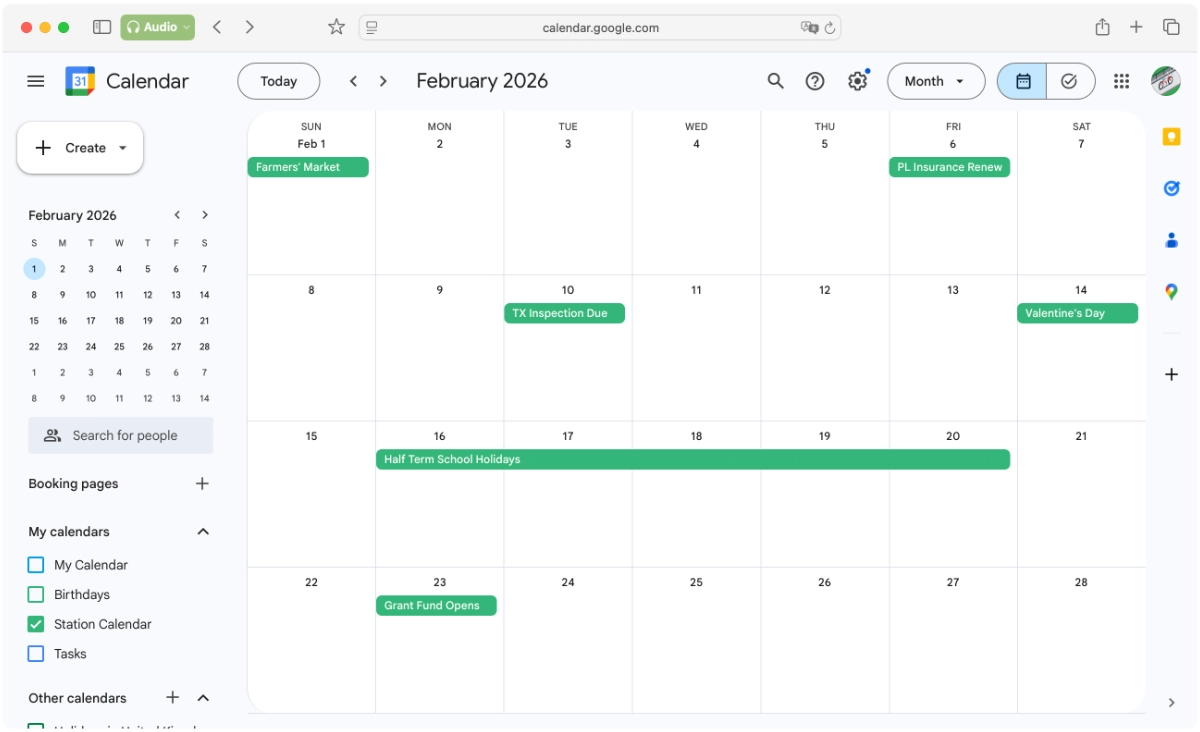
In this article we’re going to set up a calendar that a radio station in the UK might use to help identify upcoming events, both where there are opportunities and operational considerations.
The purpose of a station calendar
The idea behind the calendar is to provide long-term visibility to events and important dates for the station that benefit from being thought about in advance.
Events where there is an opportunity to create content, plan an outside broadcast or sell advertising or sponsorship around can be seen further in advance. Other important considerations, such as team availability, changes to programming, licence renewals and regulatory deadlines might require some planning.
This high level calendar is only intended for use internally at the station. It’s different to a community calendar or events diary, which might be published on a station website and used on air. It’s also not used for show prep.
For team members who tend to keep events in their head and know when things are coming up, getting events down in a calendar makes it easier to share the load and get more of the team involved in working on these essential and useful tasks.
Planning ahead
Some events require planning months in advance, and a team can consider:
- What is coming up this year that we need to plan for
- Are there any conflicts that we need to manage
- Two big events on the same day or in the same week
- Staff or volunteer availability and organising cover far in advance
- Discussing changes with plenty of time, such as schedule changes to accommodate an event like a remote broadcast
Opportunities
Spotting opportunities early can be helpful, especially if there is a potential for sponsorship or funding a project and finance is going to be available, or is still available.
- Advertising and sponsorship
- Spot ads for an event
- Sponsor coverage of an event - a great way to cover costs of an OB, sport commentary, etc
- Competitions and giveaways, e.g. tickets that listeners can win
- Specific programming
- Interviews, commentary, outside broadcasts
- Invite listeners to get in touch, e.g. with messages for Mother’s Day or potentially to be interviewed for programming around an event
Operational
There are events that come around every year for businesses and media outlets.
- Licence renewals and fees
- Prepare to set aside time and budget for costs for any applications
- Chase up regulators if any expected requests and invoices have not arrived
- Leadership and accountability
- Some organisations might need to hold an annual general meeting, organise elections for leadership, etc.
- Regulatory paperwork, accounts and deadlines
- When are company accounts, tax returns and other regulatory filings due?
- Facilities
- Does your organisation need to organise PAT testing for outside broadcast equipment and arrange for fire extinguisher checks?
Event considerations
For each event added to the calendar there are a number of considerations.
In advance of an event like Remembrance Sunday a radio station might consider:
- How will this day be marked on air and online?
- What special programming and content could be planned?
- Can details of remembrance services be broadcast before Remembrance Sunday?
- How will the two minute silence be broadcast?
- Is the station technically prepared, e.g. how will the news bulletin change, where will any commercials be moved to, is the silence detector configured correctly, is a required satellite feed working in the studio, etc?
- How will the music log be changed before and after 11am?
- Will the normal presenter and any staff be available, or will a cover presenter require training or assistance?
- How will this also apply to Armistice Day?
Planning for these considerations in advance could help a radio station reflect a significant moment for its audience appropriately.
Creating and using the calendar
Creating a calendar doesn’t need to be complicated. If your station uses Google Workspace, Microsoft 365 or Zoho Mail that might be the easiest place to create and share a calendar. If all the team has their own Gmail accounts a new Google Calendar that’s shared with each team member could work well.
While there are useful tools and services for this sort of planning, a calendar that users can access easily on their devices might help with getting buy-in from the team.
Even so, it may be the case that some of the team never look at the calendar. While it could be a useful tool for visibility of future events and important dates, the organisation and communication around the events will probably still be via email, phone and so on.
Dates and events for a radio station calendar
Each station might have its own dates and events that are significant. Here are some examples that might be applicable to a typical radio station in the UK.
National
- Public holidays / national days
- Bank holidays, Christmas and Easter - start with the list at https://www.gov.uk/bank-holidays
- St. Andrew’s Day in Scotland and St. Patrick’s Day in Northern Ireland
- Significant days that are not public holidays
- Halloween, Guy Fawkes Day, Valentine’s Day, Mothers Day, Fathers Day and Shrove Tuesday
- Armistice Day and Remembrance Sunday
- Other significant days for programming might be World Book Day, International Women’s Day, Macmillan Coffee Morning and those organised by charities
- Religious observances
- School holidays - half terms, Easter, Christmas, summer - find a list at https://www.gov.uk/school-term-holiday-dates
- Specific local observances, such as an annual memorial or significant date that should be marked
Local
- Popular events in local communities with potential for content and advertising
- Christmas light switch on
- Firework displays
- Music festivals
- Street food markets
- County shows
- Popular local events (e.g. New Year’s Day swims, cheese rolling, etc)
- Fire station open days
- Christmas carols and concerts
- Occasions when you can help your listeners
- Large events that you’re not a part of could cause disruption - can you keep listeners informed of traffic, road closures, rail delays, etc? Some stations that have partnered with events seem to broadcast nothing about them once they’ve started
- Appeals that your station can organise or support
- When big events come to town
- Do you need to organise accreditation with a third party, even if you have a relationship with a team or venue?
- Without access can you still reflect that a big event is on? If a snooker tournament is coming to town can you do a feature with a local snooker club or plan for social media content?
News and sport
- When are the next elections?
- Is everyone on the team aware of Ofcom’s rules on elections?
- Should you schedule interviews across the year with local representatives to ensure you don’t only speak to the councillors who get in touch with you?
- Are there significant dates for local sport teams? When are the local football teams in rounds of the FA Cup and FA Vase?
- Remember to add the date of the draw for the next round if they win their matches so you can keep listeners informed of the team’s progress
Regulatory
This is a non-exhaustive list. Ensure you are aware of all the Ofcom (in the UK) and company/charity related dates so that if a request, invoice or reminder doesn’t arrive you can follow it up.
- Filings with Companies House, HMRC, etc
- Ofcom
- Annual licence fees (don’t forget SSDAB when the date could be different to FM)
- Provision of information (e.g. community radio finance reports)
- Community radio fund (e.g. is a grant report required, or is there a deadline for spending the funds?)
- Insurance renewal dates
Contracts and services
- Do you want to evaluate alternatives for any contracts and services, such as software and subscriptions? When do you need to start evaluating and how much notice is required to cancel a contract? Plan before you have to renew for another year.
Funding and grants
- When do grant applications open and close for a fund you would like to apply for?
- When are local councillors most likely to be able to fund a community project from member budgets? Does an election affect this?
- Has a local organisation used their budget for this year? Set a reminder for when their new budget starts.
Maintenance
- Inspection of transmitters, antennas and structures
- Preventative maintenance of equipment
- PAT testing, fire extinguishers, risk assessments, fire drills, first aid kits, etc
Next steps
When the calendar has been created it can be shared with team members so that everyone can see the events. Remember not to share it publicly - just make it available to users directly.
It may be worth agreeing how the events will be actioned so that duplication or disagreements can be avoided or managed.
Then the calendar needs to be kept up-to-date. Perhaps add events as they come up, look 12 months in advance each month or make a task for completing at the start of the year or a new academic year.